


In the laminating film sourcing process, BOPP (Biaxially Oriented Polypropylene) and PET (Polyester) are the two most commonly used materials. For wholesalers, distributors, and brand owners, understanding the differences between these materials is essential-not only for product performance and quality, but also for cost control and market competitiveness.
What Are BOPP and PET Laminating Films?
BOPP Laminating Film is made from polypropylene through a biaxial stretching process. It offers good flexibility and relatively low production cost, making it widely used in printing lamination, packaging, and everyday document protection.
PET Laminating Film, on the other hand, is based on polyester material. It provides higher rigidity and superior optical performance. After thermal lamination, PET film delivers better clarity, stronger structural stability, and higher heat resistance, making it ideal for applications that require premium quality.
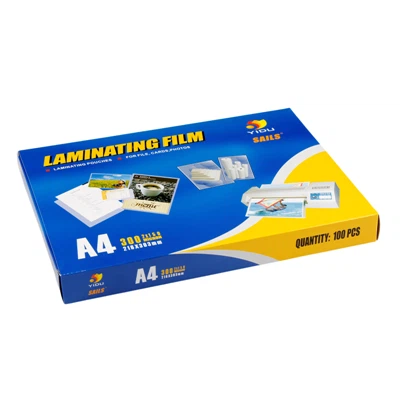
Material: BOPP
Size: Customizable
Thickness: 15–250 microns (customizable)
Core Size: 1 inch / 3 inch (customizable)

Base Material: BOPP / PET
Surface Finish: Glossy / Matte / Soft Touch
Roll Width: 300mm – 1650mm
Lamination Type: Thermal Lamination
Key Differences Between BOPP and PET Laminating Film
|
Comparison Factor |
BOPP Laminating Film |
PET Laminating Film |
|
Transparency |
High |
Higher, clearer visual effect |
|
Rigidity |
Lower, more flexible |
Higher, more rigid |
|
Heat Resistance |
Moderate |
Strong |
|
Durability |
Moderate |
Higher |
|
Cost |
Lower |
Higher |
|
Applications |
Packaging, printing |
Photos, ID cards, premium documents |
Performance Analysis
Transparency & Visual Quality
PET film offers superior optical clarity, delivering sharper and more vivid images and text. It is especially suitable for photos and high-end printed materials. While BOPP film also provides good transparency, it falls slightly short in terms of detail and gloss, making it more suitable for applications where ultra-high visual quality is not required.
Strength & Structural Stability
PET has higher inherent rigidity, resulting in laminated products that are more rigid and resistant to deformation. This makes it ideal for documents that need to maintain their shape over time. In contrast, BOPP film is softer and easier to process but offers slightly lower resistance to bending during long-term use.
Heat Resistance
PET film performs significantly better under high temperatures, making it more stable during thermal lamination and less prone to wrinkling or deformation. For high-end or industrial applications, PET is generally the safer choice.
Protective Performance
Both materials provide basic protection against moisture, dirt, and wear. However, due to its denser structure, PET offers stronger overall protection, making it more suitable for long-term preservation.
Application Scenarios
In the printing and packaging industry, BOPP is widely used for book covers, brochures, and packaging lamination due to its lower cost and good processing performance. It is the preferred option for high-volume applications.
For ID cards, photos, and important documents, PET is the better choice. Its higher transparency and durability enhance product quality and extend lifespan.
In commercial displays and high-end printing, PET film delivers superior visual results, helping elevate brand image.
How to Choose the Right Material for Your Business
If your goal is to reduce costs and improve turnover efficiency, BOPP is the more suitable option. If your focus is on enhancing product quality and user experience, PET offers clear advantages.
For long-term storage or frequently used documents, PET provides more reliable protection. For short-term or disposable applications, BOPP is often sufficient.
FAQ
Q: Which is more durable, BOPP or PET?
A: PET is generally more durable and better suited for long-term use.
Q: Which material is better for photo lamination?
A: PET, due to its higher transparency and superior visual clarity.
Q: Can BOPP fully replace PET?
A: It can replace PET in some low-end applications, but not in scenarios requiring high quality.
Q: Is there a big price difference between the two?
A: PET is usually more expensive than BOPP, though the exact difference depends on specifications and order volume.
Q: How should I choose the right thickness?
A: Thickness should be selected based on usage frequency and protection requirements, not simply by choosing a thicker option.