


In the packaging and printing industry, thermal laminating film has become one of the core materials for enhancing the surface protection and visual texture of products, especially in book printing, color box packaging, and high-end brand packaging. Its application scope continues to expand with global consumption upgrades and the increasing automation of the packaging industry.
Basic Principles and Material Structure of Thermal Laminating Film
Thermal laminating film refers to a type of functional film material that uses heating and pressure to bond a plastic film to paper or a printing substrate. Its core working principle is not simple "sticking," but rather, under specific temperature conditions, the hot melt adhesive layer becomes fluid, thereby forming a stable molecular-level bond with the substrate surface.
From a material structure perspective, thermal laminating film generally consists of three layers: a substrate layer (such as BOPP or PET), a functional coating, and a hot melt adhesive layer. The substrate layer determines the overall mechanical strength and transparency, the coating affects the surface optical effects, and the hot melt adhesive layer directly determines the adhesion performance and final peel strength during the lamination process.

Laminating Film For Printing
Base Material: BOPP / PET
Surface Finish: Glossy / Matte / Soft Touch
Roll Width: 300mm – 1650mm
Lamination Type: Thermal Lamination
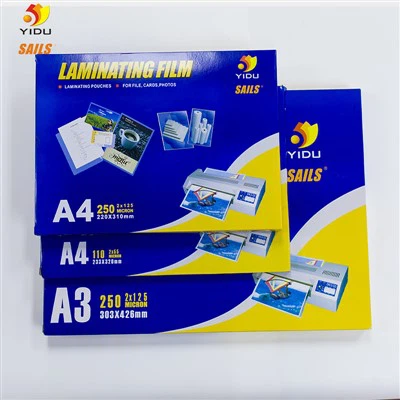
A4 Size Laminating Film
Standard Size:216mm x 303mm
Surface Finish:Glossy / Matte
Thickness Range:50 mic – 350 mic
Packing Method:100 sheets/box, customizable

Copier OPH Film With Paper
Material:PET
Size:A4 210*297, A3 279x420mm and customized
Thickness:100mic and customized
MOQ:Negotiable
Customized:Size, Thickness , all customized

UV Resistant Laminating Film
Material: High-transparency polyester film (PET)
UV blocking rate: ≥99%
Surface treatment: Glossy, matte, frosted, etc. (customizable)
Main Types and Performance Differences of Thermal Laminating Film
From an industry application perspective, thermal laminating film does not exist as a single standard product. Instead, it comprises several sub-types based on material systems and surface treatment methods. The most common include BOPP thermal laminating film and PET thermal laminating film, which differ significantly in cost structure and performance.
BOPP thermal laminating film dominates the market for high-volume printing and conventional packaging due to its lower material cost, stable processing performance, and compatibility with high-speed laminating equipment. Its advantages lie primarily in its good transparency and stable thermal lamination performance, allowing it to effectively control overall production costs while ensuring basic protective functions.
In contrast, PET thermal laminating film excels in mechanical strength, heat resistance, and surface smoothness. Therefore, it is more suitable for high-end packaging and applications requiring high-quality appearance, such as electronic product packaging and high-end gift box packaging. While its material cost is higher, it offers significant advantages in the visual presentation and structural stability of the finished product.
Impact of Surface Treatment on Final Packaging Effect
Besides differences in base materials, the surface treatment process of thermal laminating film is also a crucial factor influencing the final visual and tactile experience. Glossy and matte lamination are the two most common processing methods in the industry.
Glossy lamination increases surface reflectivity, resulting in stronger color saturation and visual impact, suitable for packaging types that emphasize product display. Matte lamination, on the other hand, reduces surface reflectivity, creating a softer, more sophisticated overall visual effect, thus finding wider application in branded packaging and high-end consumer goods.
Development Trends in the Thermal Laminating Film Industry
From a global perspective, the thermal laminating film industry is undergoing an upgrade from traditional functional materials to high-performance and environmentally friendly materials, with environmental friendliness and premiumization being the two most prominent directions.
Regarding environmental trends, the European and American markets are increasingly demanding recyclable and low-environmental-impact materials, making BOPP-based environmentally friendly substrates and biodegradable coating technologies a key focus of research and development. On the other hand, in terms of premiumization trends, brand customers are continuously raising their requirements for packaging texture, durability, and print compatibility, leading to a growing demand for films with high transparency, high flatness, and special tactile qualities.
Meanwhile, OEM and ODM customization models are gradually becoming the mainstream procurement methods. More and more customers are no longer purchasing standardized products, but rather customizing the thickness, width, adhesive layer performance, and surface effects based on their own packaging design needs. This places higher demands on the factory's R&D capabilities and production stability.
How to Choose a Stable and Reliable Thermal Laminating Film Supplier
In the actual procurement process, supplier selection is often more critical than individual product parameters, because as an industrial material, the stability of thermal laminating film directly depends on the raw material control system, production process control capabilities, and quality testing standards.
For buyers, the first step is to verify that the supplier is a source factory with complete production capabilities, rather than simply a trading intermediary. Factories typically have significant advantages in cost control, delivery cycles, and customization capabilities. Secondly, it's crucial to assess their mature OEM/ODM capabilities, including the ability to adjust coating formulations, adhesive properties, and material structures according to customer application scenarios. Furthermore, export experience is equally important, especially for suppliers targeting the European and American markets, who need internationally compliant quality control systems and stable batch delivery capabilities.

Standardized Logic of OEM/ODM Customization Process
In a mature thermal laminating film factory system, OEM/ODM customization follows a standardized process to ensure product consistency and stability in large-scale production. The entire process begins with customer application needs analysis, including usage scenarios, equipment types, and target performance indicators. This is followed by sample development, continuous optimization of material structure through laboratory testing and small-batch trial production, and finally, confirmation of technical parameters before mass production. During production, a multi-layered quality inspection system ensures batch stability.
The core value of this standardized process lies in reducing trial-and-error costs while improving consistency between different batches of products, which is one of the most critical competitive capabilities in the industrial materials supply chain.